
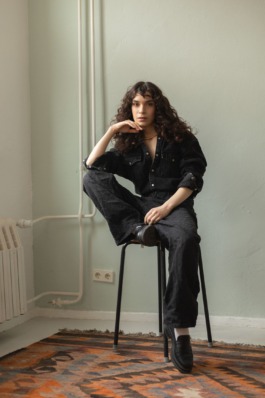
Discover how editorial fashion photography in Berlin blends emotion, minimalism, and storytelling. A comprehensive guide for designers looking to create meaningful, art-driven editorial imagery in Europe’s most authentic creative city.
Written by Miriam Dang
Editorial fashion photography in Berlin doesn’t look like the imagery you see in traditional fashion capitals.
There is no polished perfection, no excessive glam, no over-styled drama.
Instead, Berlin gives you:
softness
honesty
emotional presence
minimalism
quiet power
Designers who create editorials here often say:
“My work feels more human in Berlin.”
Because here, fashion is not photographed as spectacle —
it’s photographed as experience.
Berlin has turned editorial photography into a language of its own:
part documentary, part art, part emotional architecture.
This guide will help designers understand exactly how to work with that language — and use Berlin as a creative partner rather than a backdrop.
While New York and London lean into speed and attitude, and Paris leans into beauty and craft, Berlin leans into something else entirely:
emotional minimalism.
It’s a style defined by:
simple compositions
subtle gestures
honest expression
soft light
thoughtful space
quiet intimacy
And yet, the images feel full.
Because the minimalism isn’t empty — it’s intentional.
It directs your gaze to the emotional truth of the scene.
Minimalism in Berlin doesn’t come from design trends.
It comes from values:
authenticity
anti-pretension
cultural depth
creative freedom
emotional clarity
When designers shoot in Berlin, they intuitively adopt this attitude.
Clothing becomes more than clothing;
it becomes a character, a voice, a quiet force.
In many cities, the goal is to make the model look flawless.
In Berlin, the goal is to make them look true.
Designers choosing Berlin for editorials often seek:
softness instead of sharpness
mystery instead of expressionism
presence instead of posing
The result?
Images that breathe.
Great Berlin editorials feel like films in slow motion.
You feel the story, even if you don’t fully see it.
This is the genius of Berlin’s editorial style:
it invites interpretation rather than forcing clarity.
It whispers.
And whispering pulls people closer.
Berlin’s editorial fashion look can be understood through five pillars:
Light — soft, overcast, cinematic
Color — muted, natural, analogue-inspired
Texture — concrete, stone, metal, fabrics
Emotion — subtle but deep
Space — negative space, breathing room, minimal composition
Let’s break them down.
Berlin is famous for its natural light — especially in autumn and winter.
This light is:
diffused
gentle
flat in the best possible way
emotionally neutral (perfect for editorial mood)
Designers working with natural fibers, structured pieces, or soft palettes find their garments look more expensive, more intentional, and more tactile in Berlin’s light.
A mohair coat looks dreamy.
A wool jacket looks architectural.
A linen dress looks like poetry.
This is why editorial photographers here rarely use harsh artificial lighting — nature does the work.
Berlin’s color palette is naturally:
desaturated
earthy
cinematic
calm
Think:
stone
taupe
stormy blue
warm grey
oxide green
pale sun
worn metal
Designers often comment that colors they hated in studio light become alive in Berlin.
Because Berlin’s color palette doesn’t compete —
it supports.
It allows clothing to be the hero.
Every editorial needs contrast — not just in color, but in texture.
And no city does texture like Berlin.
You find:
peeling surfaces
textured stone
geometric shadows
industrial lines
rust
layers of posters
subtle architectural repetition
These textures give fashion images a sense of depth, history, and tactility.
Designers with bold shapes or sculptural silhouettes find that Berlin’s textures anchor their designs.
Minimalist brands find that Berlin’s surfaces add complexity without chaos.
The emotional tone of Berlin modeling is distinct.
The expression is rarely dramatic or exaggerated.
Instead, models embody:
introspection
stillness
authenticity
calm presence
This emotional subtlety is the foundation of Berlin editorial style.
Designers who want to show depth rather than spectacle are drawn to this.
Berlin editorial photography uses negative space like few other cities.
The compositions are often:
simple
quiet
deliberate
architectural
Clothing becomes sculptural.
The model feels anchored.
The story unfolds through quiet geometry.
When done right, space becomes a narrative device.
Sarah by Miriam Dang
Here’s where the article becomes deeply practical.
This section teaches designers how to see Berlin the way editorial photographers do — as a visual notebook full of cues and opportunities.
The best editorial spots in Berlin aren't on postcards.
They’re in the in-between spaces:
a rusted balcony
a shadow cutting across a wall
an old café window
a pale stone corridor
a fire escape staircase
a rooftop with endless sky
Editorial photographers walk the city like sketch artists —
observing light, shadow, texture, silence, movement.
Designers who adopt this mindset create stronger moodboards and deeper stories.
Here’s a method used by some of the best editorial teams in the city:
Look at every location through three lenses:
Emotion
What does it feel like?
Calm? Sharp? Melancholic? Strong?
Texture
How does it complement or contrast your fabric?
Space
Can your story breathe there?
Use this when scouting Mitte for minimalism, Kreuzberg for rawness, or Tempelhof for freedom.
One morning near Museumsinsel, I photographed a model wearing a cream tailored coat. The building behind her was simple — pale stone, soft shadow, nothing dramatic.
But when the model exhaled and the wind shifted the coat by a few centimeters, the entire story clicked.
Not because of the outfit.
Not because of the backdrop.
Because of the moment.
This is Berlin’s genius:
ordinary places produce extraordinary emotion.
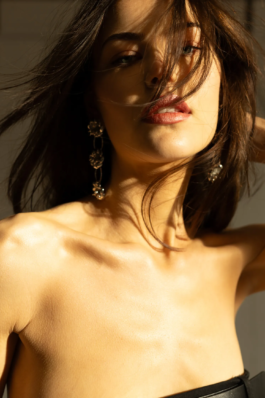
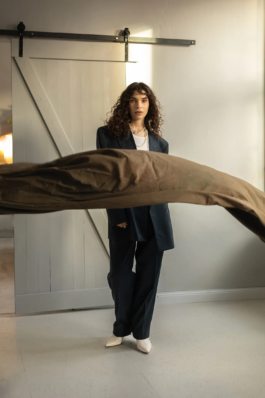
Sarah by Miriam Dang
Berlin rewards preparation — not rigid planning, but intentional creativity.
The strongest editorials in this city come from designers who understand both:
their emotional thesis, and
the environmental truth of Berlin.
Here’s a complete designer-centric workflow used by top editorial teams.
Every fashion collection has a pulse —
a feeling beneath the fabric.
Before you plan anything visual, answer this:
“What emotional truth does this collection express?”
Examples:
vulnerability
precision
serenity
rebellion
longing
introspection
freedom
tension vs softness
transformation
This emotional core becomes your editorial anchor.
It guides:
location
lighting
styling
model choice
poses
pacing
color treatment
overall atmosphere
When emotion leads, story follows.
Most moodboards fail because they show what something looks like instead of why it matters.
A strong editorial moodboard includes:
3–5 images that define the internal tone.
Berlin-specific light examples:
soft overcast
pale winter sun
window light
architectural shadows
Show how environment + fabric interact.
Not exact colors — but temperature, mood, saturation profile.
A good editorial has a beginning, middle, and end, even if subtle.
In Berlin, the right model isn’t the most conventionally beautiful.
It’s the one who can feel on camera.
Look for:
emotional intelligence
calm presence
ability to hold stillness
expressive neutrality
subtle facial nuance
comfort in unposed moments
You want a model who inhabits the frame, not overshadows it.
Berlin editorial photography favors natural, tactile, honest styling.
Best clothing characteristics for Berlin:
textured fibers (wool, mohair, linen)
sculptural silhouettes
monochrome palettes
neutrals and earth tones
oversized coats and structured tailoring
minimal accessories
Avoid:
excessive shine
neon accents
plastic surfaces
overly polished looks
They conflict with Berlin’s emotional architecture.
Every great editorial has a hidden narrative.
Berlin editorials, in particular, follow a quiet cinematic arc.
Here is a structure used by high-level editorial teams:
Soft, simple frames.
The viewer is introduced to:
the mood
the model
the palette
the emotional tone
These are the “lean in” images.
The editorial deepens through:
posture
gaze
subtle motion
interactions with light
transitions within space
These images create connection.
The visual heartbeat increases slightly.
This can be expressed through:
movement
wind
shadows
texture shifts
structural poses
fabric reacting to environment
This phase gives narrative shape.
The editorial becomes softer, slower, more introspective.
These frames feel like stillness.
The last images echo the first ones —
but with greater emotional depth.
This is where the story lingers.
Berlin’s directing style is relational, not technical.
It’s less “pose like this” and more “exist with intention.”
Here’s how that looks in practice:
Instead of forcing poses, photographers encourage:
grounding
breath awareness
micro-movements
natural posture shifts
delicate hand expressions
This creates frames that feel alive.
In Berlin, silence is not awkward.
It is creative.
Silence helps models drop performance and adopt presence.
It creates space for authenticity.
Designers are often surprised by how powerful quiet direction can be.
Berlin photographers rarely give overwhelming instructions.
Instead, they give:
one emotional cue
one physical cue
one environmental cue
Example:
“Think softness. Drop your shoulders. Lean into the light.”
Short.
Simple.
Intentional.
The Berlin editorial grade is a blend of:
soft contrast
warm shadows
gentle highlight rolloff
muted saturation
filmic grain
cool-toned neutrals
Why this works:
It highlights texture
It supports emotion
It softens imperfection
It creates timelessness
It makes clothing look tactile and expensive
Designers benefit from this aesthetic because it elevates fabrics through emotional tonality rather than commercial sharpness.
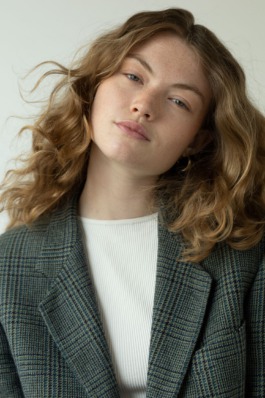
This section adds high practical value — the kind designers save and revisit.
Berlin resists superficiality.
A concept must feel true — not imported.
Designers often try to “fill” the frame.
But Berlin thrives on minimal compositions.
Let the clothing breathe.
Berlin editorial photography relies on restraint.
Too many layers, too many props, too many intentions blur the emotional core.
Berlin’s mood shifts dramatically.
Best editorial times:
early morning
overcast midday
pre-sunset
winter afternoons
blue hour
Worst:
harsh summer noon
Not every photographer can translate Berlin’s emotional language.
Here’s what designers should seek:
Ask yourself:
Does the photographer listen?
Do they understand the emotional thesis of your collection?
Do they care about the same things you care about?
Berlin requires mastery of:
diffused light
shadow softness
window light
grey sky gradients
neutral tones
The best Berlin photographers think like editors:
narrative
rhythm
pacing
emotional arc
thematic cohesion
You need someone who thinks in stories, not snapshots.
These are professional-level exercises rarely shared publicly — designers love them.
Craft a mini editorial using only five frames:
Feeling
Character
Fabric
Movement
Farewell
This keeps your storytelling honest.
For one week:
photograph your clothing every day at 10:00 and 15:00
same window
same camera
same angle
You’ll learn more about your fabric’s emotional behavior than any studio test could teach.
Create a 12-tile grid with textures you want your collection to coexist with:
concrete
foliage
stone
rust
glass
brick
sky
shadows
This informs your editorial’s visual ecosystem.
Berlin doesn’t overwhelm.
It reveals.
It doesn’t demand performance.
It invites presence.
It doesn’t polish flaws.
It elevates truth.
For designers, Berlin is more than a location —
it’s a collaborator, a silent co-creator, a partner in emotion.
Fashion photography in Berlin teaches you that:
minimalism is not empty
emotion is not fragile
stillness is not boring
imperfection is not a weakness
authenticity is not optional
And above all:
Fashion becomes unforgettable when it feels human.
This is what Berlin gives you.
And this is why your next editorial belongs here.