
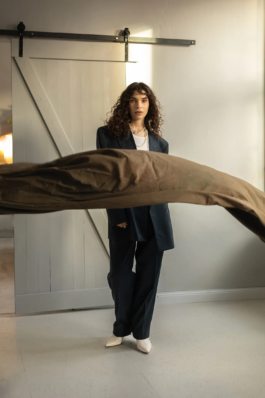
Written by Miriam Dang
Every fashion city has an identity.
Paris is elegance.
New York is ambition.
London is attitude.
Berlin? Berlin is truth.
It doesn’t seduce you with glamour or overwhelm you with luxury. It’s a city that shows up as it is — raw, textured, imperfect — and expects you to do the same.
This is why fashion photography in Berlin has become its own movement. It’s not about producing flawless images. It’s about producing honest ones.
When designers shoot here, they often say the same thing:
“My collection feels more real here.”
Because Berlin has a habit of stripping away everything unnecessary, leaving behind only what matters:
emotion, intention, and story.
That’s the heart of editorial photography.
Most cities ask you to match their pace.
Berlin asks you to find your own.
Fashion photography here is slower, deeper, more observational. Instead of chasing the perfect pose, photographers wait for the moment that feels true — the micro-expression between breaths, the way fabric folds when the model relaxes, the softness of overcast light settling onto skin.
If you’re a designer planning to shoot in Berlin, here’s what makes this city visually unforgettable:
The best-kept secret among Berlin photographers?
The sky.
Berlin stays overcast more often than sunny — a blessing for editorial work. Diffused light creates a natural softboxacross the entire city:
smoother skin tones
even highlights
dramatic but gentle mood
calm, painterly contrast
One afternoon in late fall, I photographed a model on a rooftop near Prenzlauer Berg. The light was pale, almost silver, and her coat — a structured wool piece — absorbed it like a story. No harsh shadows. No distracting glare. Just clarity, emotion, and intention.
That’s Berlin light:
honest, soft, and quietly cinematic.
Berlin doesn’t hide its age.
It celebrates it.
Concrete. Graffiti. Broken tiles. Metal staircases. Weather-worn balconies. Posters layered like geological strata.
These textures add narrative depth to fashion images in a way clean cities cannot.
Designers working with experimental silhouettes, conceptual pieces, heritage fabrics, or androgynous cuts find that Berlin creates a visual friction that brings their garments to life.
In Berlin, the backdrop is never just a backdrop.
It's part of the story.
Berlin models don’t pose.
They inhabit.
There is something deeply human about the way fashion is photographed here. The goal isn’t to look perfect — it’s to look real, present, grounded.
Here, personality outweighs posture.
This makes Berlin a powerful place for designers wanting to show:
authenticity
raw emotion
vulnerability
strength
subtlety
Fashion becomes a character.
Not a costume.
Berlin is a visual playground—if you know where to look.
Below are the most iconic editorial areas, with context for which types of designs shine there.
Perfect for:
luxury fashion
minimalism
monochrome collections
tailored silhouettes
Mitte offers:
glass facades
modern geometry
neutral backgrounds
upscale atmosphere
It’s where Berlin looks the most controlled — the ideal space for designs that rely on structure and simplicity.
Perfect for:
streetwear
youth culture collections
expressive, bold designs
inclusive brand identities
These districts feel alive.
Every alley is a collage of history and rebellion.
For designers who want character, this is where you find it.
Perfect for:
avant-garde collections
conceptual shapes
movement-focused garments
dramatic editorials
Tempelhof is all sky and horizon — a place where silence becomes part of the frame.
If your designs need space to speak, this is where they find it.
Some of the best editorial backgrounds aren’t famous:
a peeling doorway in Moabit
a sunlit staircase in Wedding
a rooftop in Friedrichshain
an old café window in Schöneberg
These places carry emotional weight.
They whisper instead of shout.
Perfect for designers who want intimacy and authenticity in their visuals.
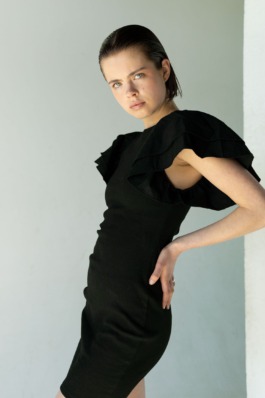
Toni by Miriam Dang
This section is where we go deep — into the full creative process.
Here is the step-by-step blueprint used by top editorial teams in Berlin.
Ask yourself:
What should people feel when they see this collection?
What emotion sits inside the fabrics?
Is the story about softness, power, identity, vulnerability, rebellion?
Fashion photography in Berlin works best when it begins with the emotional thesis of the collection.
Once you know the emotion, everything else aligns.
Most moodboards are… noise.
The moodboards that work in Berlin include:
lighting references (soft/overcast, window light, cold shadows)
emotional references (not poses, but tones)
textures
color palette intentions
story arc (intro → tension → quiet scene → resolution)
Good moodboards feel like short films, not Pinterest collages.
In Berlin, the best models are:
introspective
expressive without trying
natural movers
emotionally intelligent
comfortable with silence
The wrong model can ruin the authenticity of your brand.
The right one elevates it.
Berlin’s soft lighting favors:
wool
linen
knits
matte cotton
textured coats
natural fibers
It challenges:
shiny synthetics
neon colors
highly reflective surfaces
Your fabrics should work with the light, not fight it.
Berlin photographers work differently:
fewer poses
more breath
more emotion
more conversation
more silence
more “in-between” moments
Great editorial photography is rarely loud.
It’s quiet, intentional, present.
As a designer, let the photographer:
watch the light
guide the rhythm
choose the pauses
direct the atmosphere
This produces images that feel alive.
These are signature techniques used throughout the city.
Instead of telling models what to do, photographers encourage:
grounding
subtle awareness
natural movement
emotional stillness
It creates images with soul.
In Berlin, photographers shoot:
the breath before the pose
the moment the model looks away
hands relaxing
hair moving
clothing falling naturally
Calm is a visual language here.
Even digitally, Berlin prefers:
gentle color grading
warm highlights
soft blacks
grain
muted saturation
The result?
Timelessness.
To save you time, budget, and stress:
Berlin thrives on simplicity.
Too many layers = visual noise.
Match the mood, not the map.
Examples:
soft linens → rooftops or Tempelhof
streetwear → Kreuzberg, altbau entryways
luxury outerwear → Mitte architecture
avant-garde → industrial textures
Everything must speak the same emotional language:
the model
the clothing
the light
the location
the grading
the direction
Otherwise, the story fractures.
A good portfolio isn’t enough.
Look for:
Does each image feel intentional?
Does it suggest a story?
Ask them:
How do you approach emotion?
What does “beauty” mean to you?
How do you direct models?
Their philosophy should fit your brand.
Berlin = natural light world capital.
Your photographer should understand:
soft diffusion
overcast gradients
winter tone
reflective surfaces
shadow layering
This knowledge transforms clothing.
These come directly from high-level editorial practice used in Berlin.
Create five frames that describe your collection:
The Feeling
The Character
The Tension
The Detail
The Goodbye
This builds narrative coherence.
Place your fabric in window light.
Photograph it for 10 minutes.
Observe:
fold behavior
shadow depth
color drift
texture response
Designers often rediscover their own work through this.
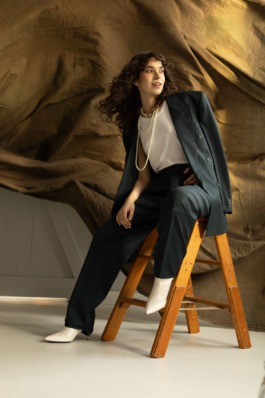
Sarah by Miriam Dang
Q: Why is Berlin so strong for editorial photography?
Because it’s authentic, emotional, and visually rich without trying.
Q: Do I need permits?
Most outdoor spaces are free, but commercial shoots in historical areas may require permission.
Q: When is the best time to shoot?
Golden hour all year; overcast days are perfect for softness.
Q: Should I bring a stylist and HMUA?
Yes — Berlin’s editorial scene values cohesive styling.
Q: How do I choose a photographer?
Look for emotional intelligence, light mastery, and storytelling depth.
Fashion photography in Berlin isn’t about perfection.
It’s about presence.
It’s about letting clothing exist in environments that breathe.
It’s about models who feel, not perform.
It’s about designers who want to create images that matter.
It’s about stories that unfold quietly, honestly, beautifully.
Berlin reminds us that fashion is not just visual.
It’s emotional.
And when you photograph fashion in Berlin, you’re not just capturing garments —
you’re capturing truth, and turning it into visual poetry.